Infrastructure or Realm Views
WOCU-Monitoring allows access to the data of each Realm in an independent way. To access the particular views of each monitored infrastructure, click on the name or icon of the desired Realm in the Home.
To navigate through the different tabs of a specific realm, you have the following side menu:
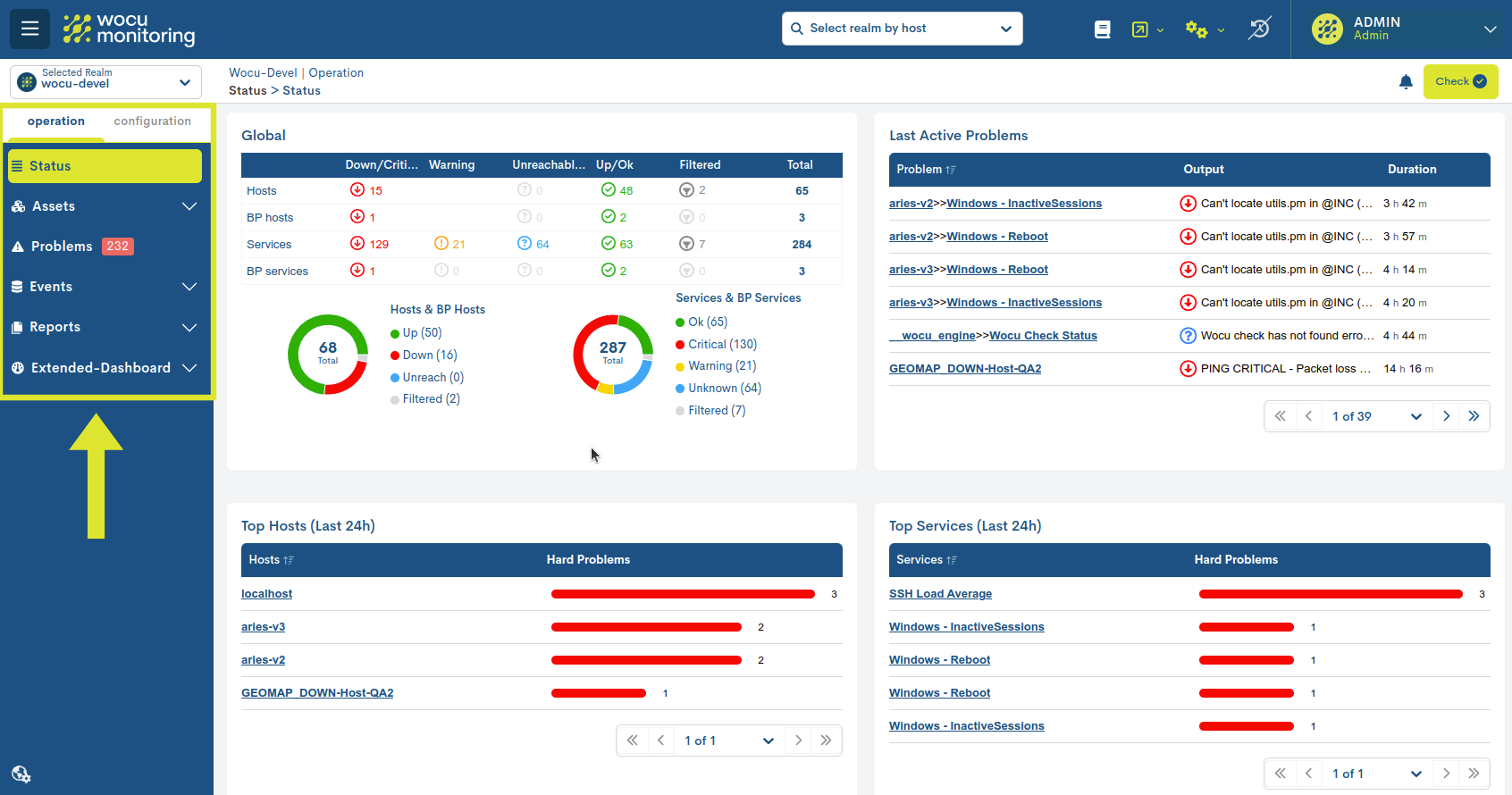
At the top of the view, there is a button that collapses/expands this menu.
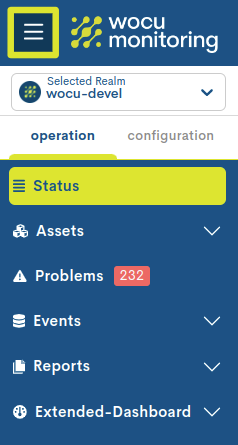
User administration by Realms
By clicking on the Open Realms Settings button, located in the lower left of the side menu, you can directly access the Users by Realm (Users) module, designed tocentralize the management of users and access for the selected Realm.
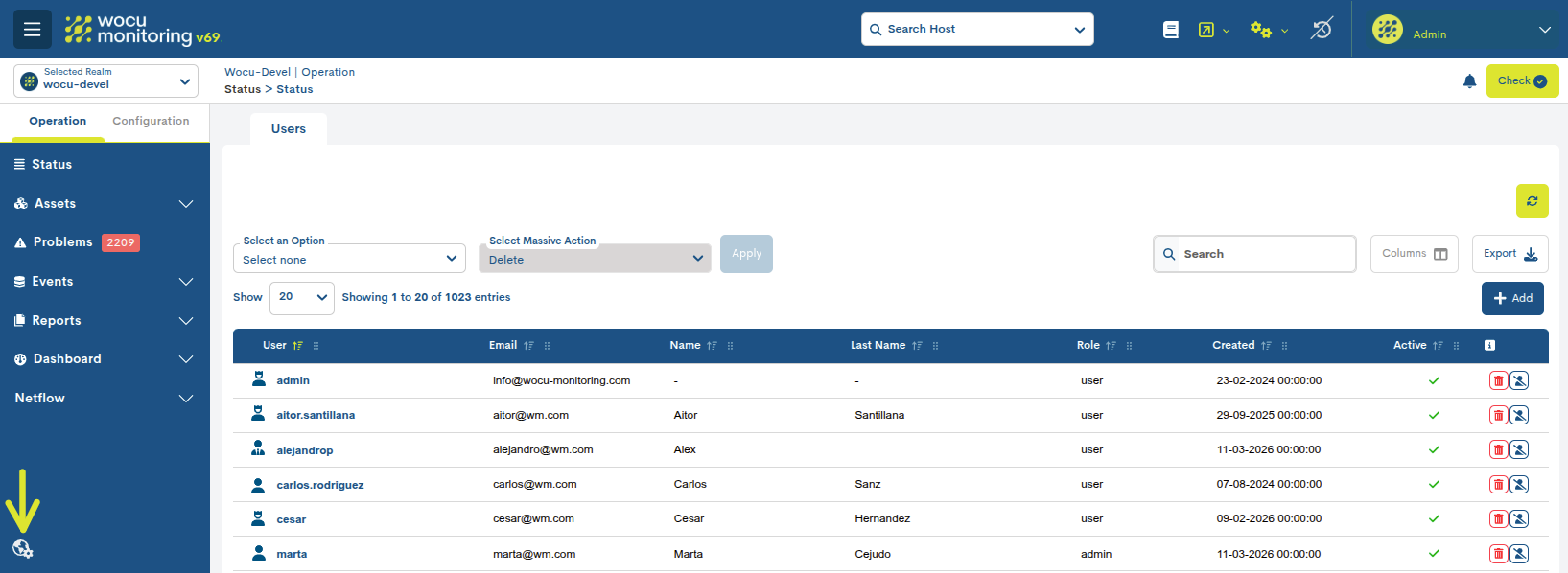
Global list of users
First is the general list of users registered in the Realm, where the following information is displayed:
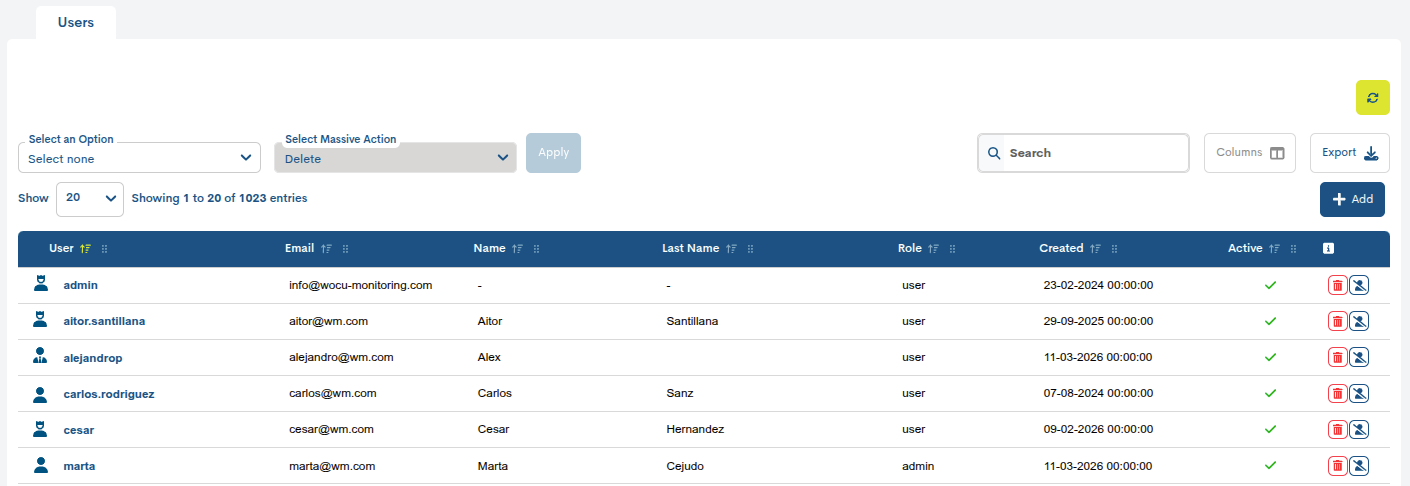
User: identifier used by the user to access the platform. Next to the name is an icon representing the assigned role, allowing visual identification of the user type.
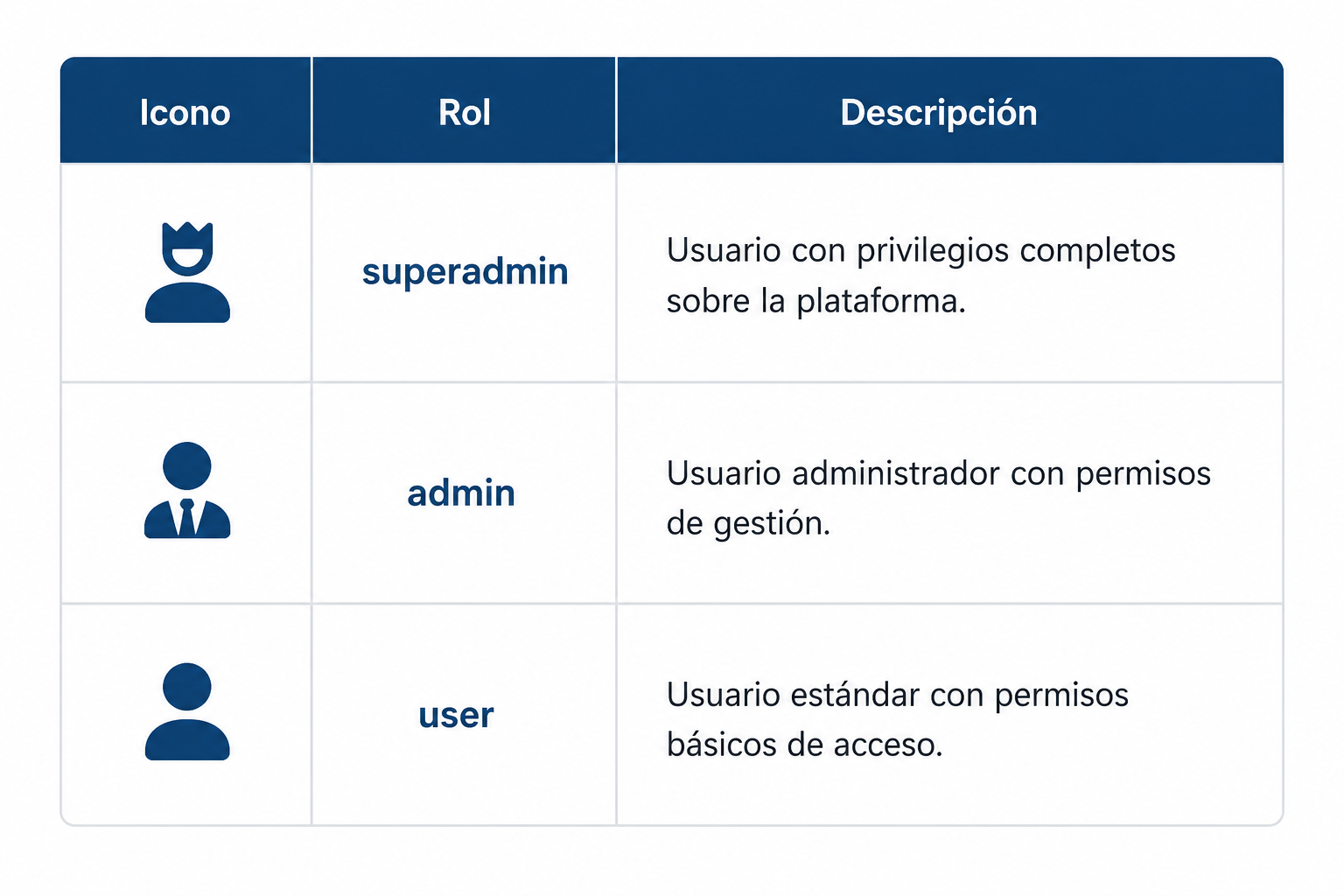
Furthermore, clicking on the name opens a pop-up window with detailed profile information and an edit button to modify its settings.
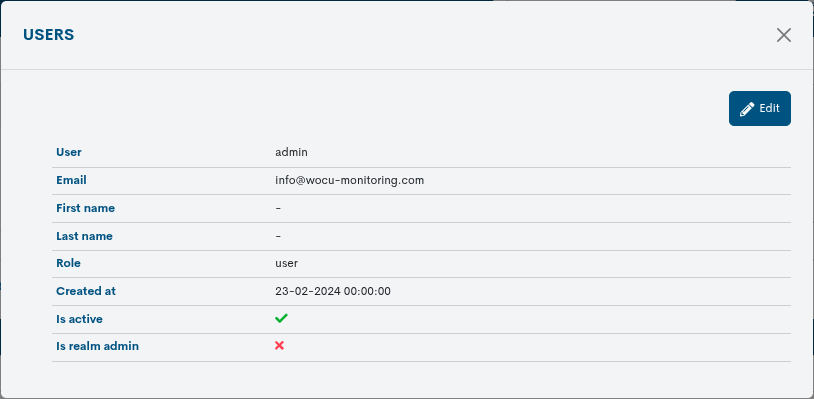
Email: email address associated with the user.
Name: username.
Last Name: User’s last name.
Role: assigned role within the kingdom.
Created: user creation date.
Active: current user status (active/inactive).
Actions regarding users
Furthermore, the table includes individual administrative and management actions (ℹ) for each user profile:

Delete: Allows you to permanently remove a user from the realm. Before executing the deletion, the system will request confirmation of the action.
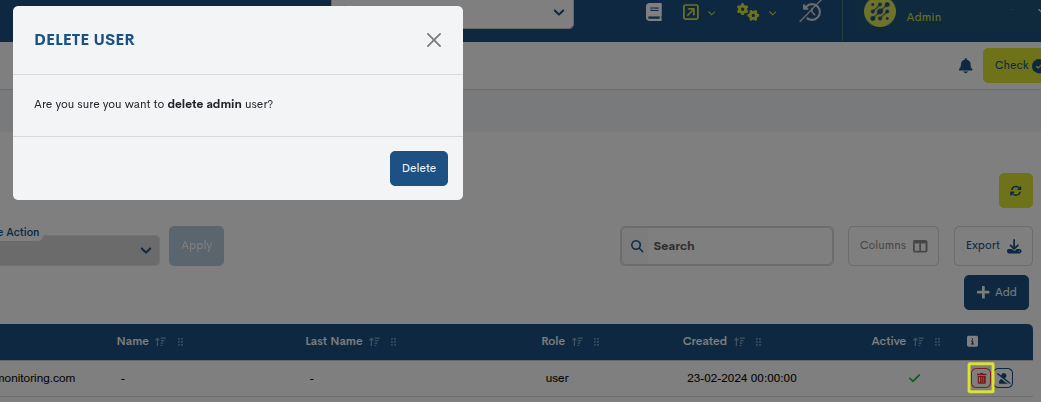
Restrictions
A
Superusercan delete a user from any role except their own user.their own user.An
Admincan only delete users with the ``User` role.An
Admincannot delete otherAdminusers.Users with the “User” role do not have access to this functionality.
Users will not be able to select themselves for mass deletion.
More information at: Rules and Permissions by Role.
Mass deletion
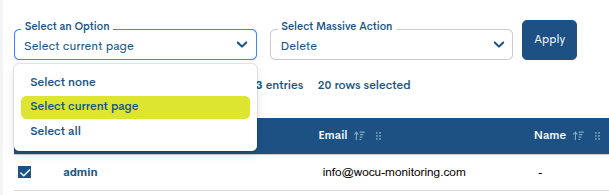
This action can also be performed in bulk using the drop-down selection menu, which allows you to choose between:
Users visible on the current page (Select current)
All users enabled in the table (Select all).
Once the selection is made, the bulk action Delete must be chosen to execute the deletion of the selected users.
Disable user: Allows you to deactivate a user without deleting them from the platform. This means that the user will remain registered in the system, but access to the platform will be blocked while the user is deactivated.
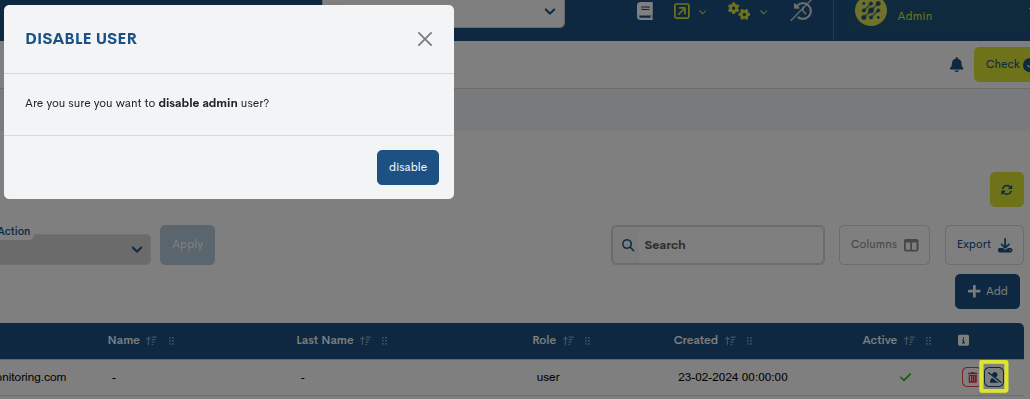
Restrictions
A
Superusercan disable users of any role except their own user.their own user.An
Admin` can only disable users with the ``Userrole.An
Admincannot disable otherAdminusers.Users with the
Userrole do not have permission to execute this action.An authenticated user cannot deactivate themselves.
More information at: Rules and Permissions by Role.
New user registration (+ Add)
The + Add option allows you to register new users within the selected realm.
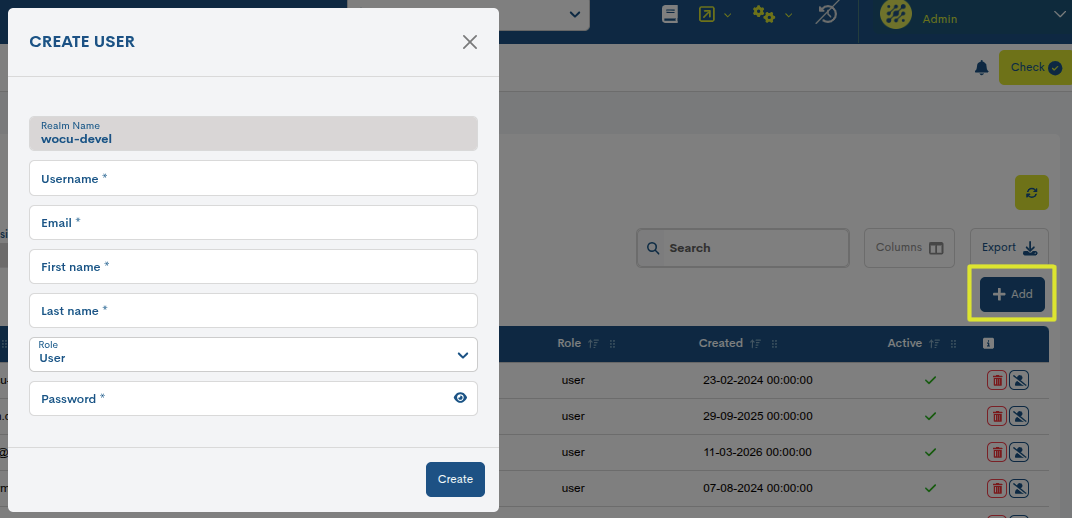
The creation form includes the following configuration fields:
Username: Unique user identifier used to log in to the platform.
Email: Email address associated with the user for notifications and authentication.
First Name: username.
Last Name: User’s last name.
Role: The role assigned to the user within the realm. The available rolesdetermine permissions and access level:
Superuser
Admin
User
More information at: Rules and Permissions by Role.
Password: Initial user password for accessing the platform.
Once created, the user will automatically appear in the users table.
Exporting the user list
The Export option allows you to download the information from the users table for auditing, analysis, or data backup.

The available formats are:
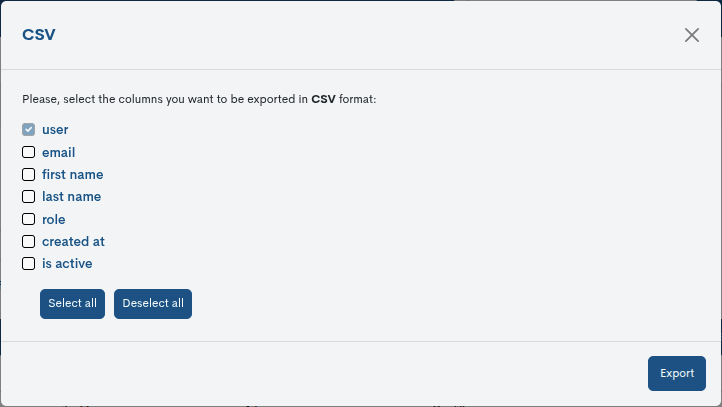
CSV
Export data in a tabular format compatible with tools like Excel or Google Sheets. Ideal for data analysis and manipulation.
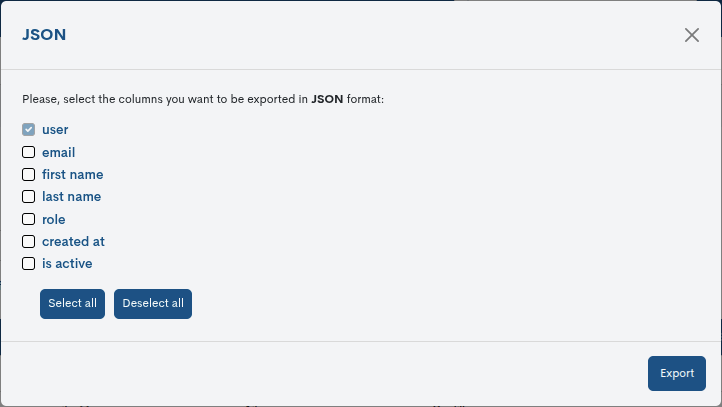
JSON
Exports data in structured JSON format. Oriented towards integrations, automatic processing, or information exchange between systems.
Important
The export will always respect the permissions of the authenticated user and will only include users visible to that role.
Rules and Permissions by Role
Role |
Permits |
Restrictions |
|---|---|---|
Superuser |
|
|
Admin |
|
|
User |
|
Realm Selector
Fixed position selector that gathers all available Realms, in order to be able to switch Realms at any time and from any location in the tool, without having to go through the Home.
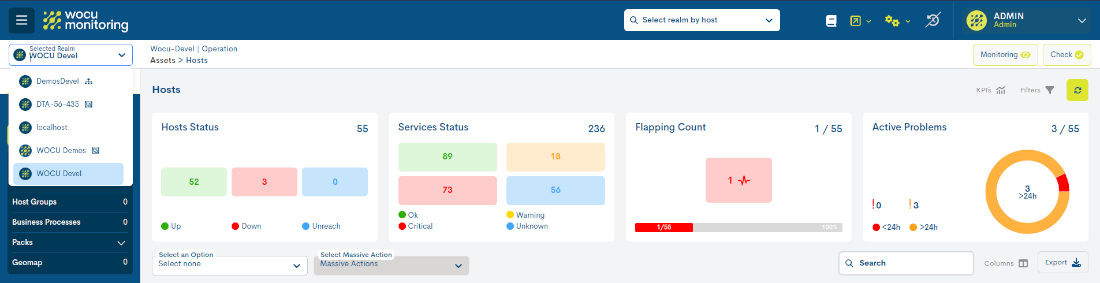
If one of them is selected, the view will be updated immediately, showing in the first instance the Status section related to the chosen option.
Each Realm is identified by the following elements (from left to right):

Customisable icon associated with the Realm
Realm Identifier Name
Icon identifying the Realms in WOCU. Visible only in Multi-realms and Hosts Groups-based realms. The icon associated with each realm is fully configurable and depends on the Administrator’s discretion; however, the system will default to the WOCU-Monitoring radar icon if none is specified. More information at: Creation of Realms.
When a Realm has the Observability enabled, a magnifying glass icon with a stylized eye inside it will appear next to its name.
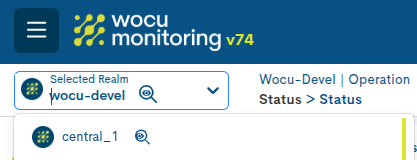
Information on the health of Multi-realms and Realms based on Hosts Groups.
Clicking on the ? icon (next to the Realm Selector) will bring up a new information window which provides a breakdown of the status/availability of the positioned Realm.

The system proceeds to determine and assign a global status according to the availability of the different entities that make up the Realm. That is, if all the member entities of the Realm are operational, the ? button will be shown in green; if, on the other hand, one of its members is no longer available, the button will be shown in red (associated with a negative status).
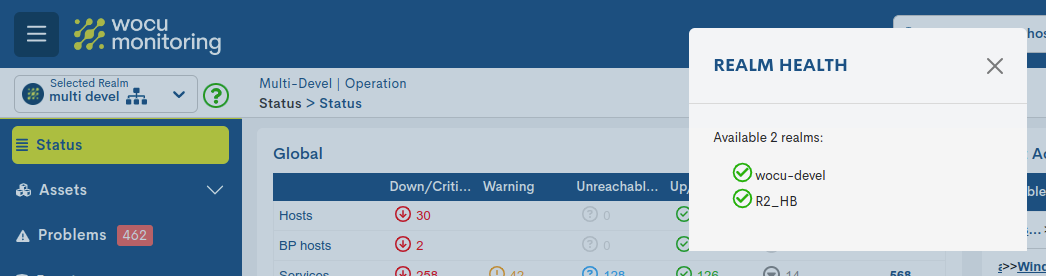
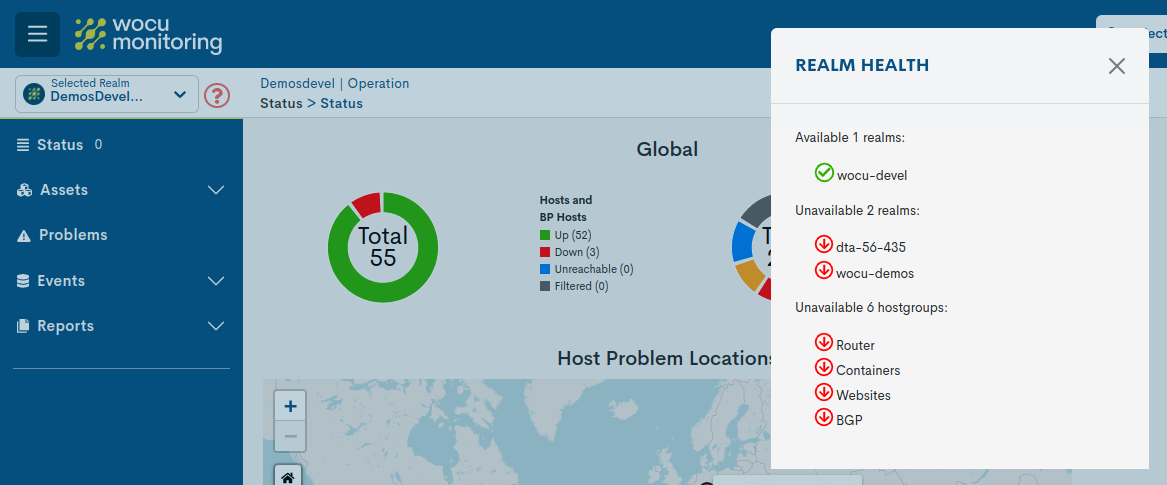
If the Multi-Realm or Realm based Hosts Group suffers a total downtime, this button will be disabled (visible in greyed out colour).

New configuration check button
In addition, the Check button is permanently located for checking and loading the configurations and changes made in WOCU-Monitoring. More information in Apply changes: Check.

The different tabs, functionalities, options and information offered by each of them are described one by one below.